Testosterone and toughness: the Pentagon declares war on manopause
Bethan Greener and Megan MacKenzie*
(originally published by the New Zealand Post here) on July 22, 2026.
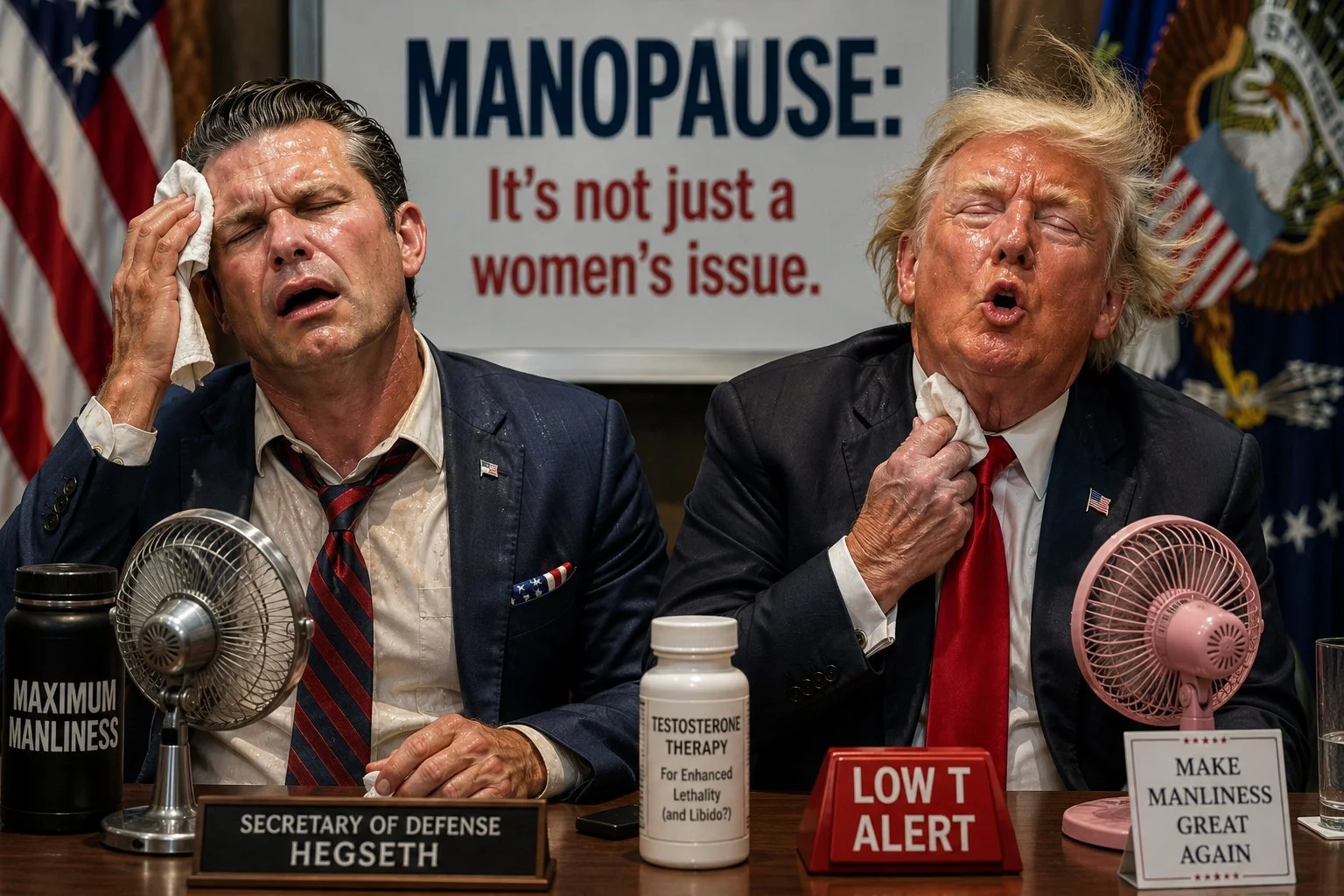
The United States’s self-declared Secretary of War Pete Hegseth has announced that men in the US Army over the age of 30 would undergo mandatory testosterone screening and have access to testosterone therapy if they chose. In doing so, he declared that he was committed to ensuring men stay on the “leading edge of lethality”.
The implication is that Hegseth has identified low libido, mood swings, fatigue and loss of pubic and underarm hair as the enemy - symptoms linked to lower testosterone. At the same time, boners, acne and irrational aggression - all associated with high testosterone - are apparently essential ingredients for winning America’s wars.
It is an unfortunate argument for a Secretary of Defence/War in his mid-forties serving under a commander-in-chief in his eighties. If testosterone is now the measure of military effectiveness, perhaps the first men due for reassessment aren't privates— they’re the Pentagon’s own senior leadership.
Or perhaps Secretary Hegseth is himself experiencing the brain fog that can accompany declining testosterone, manopause, if you will. After all, if we’re diagnosing military policy through the lens of hormones, this type of ridiculous speculation is warranted.
Women, of course, know this script well.
For generations, women’s bodies have been monitored, interfered with by men, and treated as national security liabilities. We were too hormonal, too emotional, too maternal, too distracted by menstruation, pregnancy, or menopause to be trusted in combat. Women’s biology has been endlessly scrutinised as evidence that we are somehow inherently less capable of serving our country.
Hegseth hasn’t abandoned biological essentialism. He’s simply changed the hormone.
The logic Hegseth is advancing is opening up space for the same types of ridiculous and awkward claims about men’s bodies that women have always faced. Questions like, are men too hormonal to serve in the Army?
Hegseth speaks about testosterone as though it were a stable military resource —something that can simply be topped up like fuel in a Humvee. In reality, testosterone fluctuates throughout men’s lives. It declines with age. It changes with stress. It drops significantly when men become fathers. Research even shows that new fathers undergo hormonal and neurological changes that make them more responsive caregivers.
If hormones determine combat effectiveness, should fatherhood now become a military readiness concern? Should “manopause” become the Pentagon’s newest readiness challenge?
While we are asking about readiness, a similar line of question could be, are men’s unpredictable bodies a combat liability?
The average man experiences multiple spontaneous erections every day, many of them entirely unrelated to sexual arousal. Stress, fear, and even a full bladder can trigger them. Should we conclude that unexpected erections are a combat liability? Should the Army develop protocols to manage involuntary physiological responses in the field? It sounds ridiculous because it is. But it is no more ridiculous than decades of earnest debates about whether women could fight while menstruating.
Third, do you need to have testosterone, and presumably the implication is a penis, to fight the nation’s wars?
We’ve spent nearly two decades researching military culture, military effectiveness, and the debates surrounding women’s integration into combat. What is remarkable about Hegseth’s announcement isn’t that it’s new. It recycles one of the oldest and least persuasive myths in military history: that there is something special about the band of brothers that makes them able to fight wars. It’s not leadership, discipline, training, cohesion, or professionalism, but something special only men have. Hegseth is finally spelling it out more explicitly by naming testosterone as somehow the secret ingredient that separates effective warriors from everyone else (he clearly doesn’t realise women also produce testosterone).
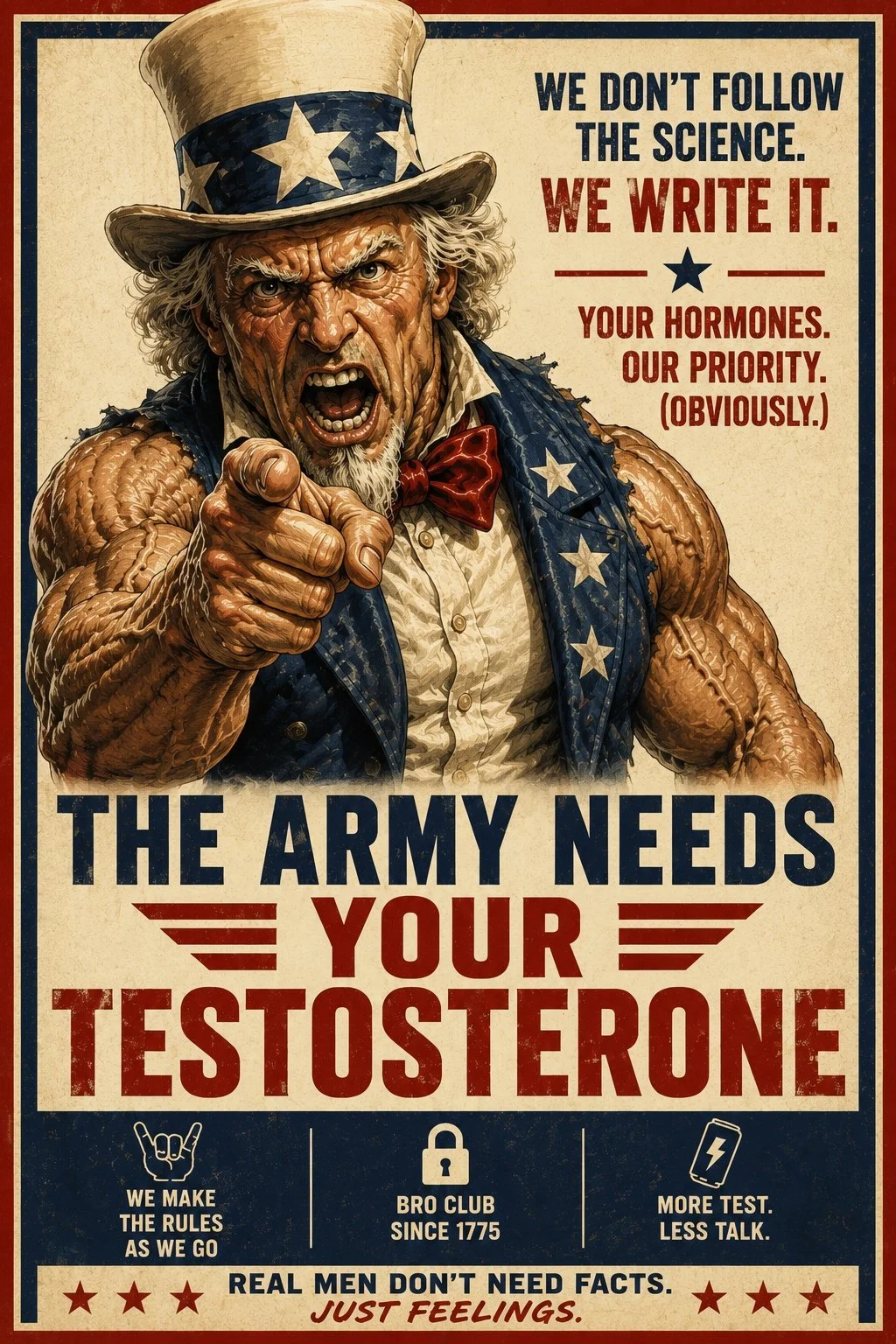
History – and military research – suggest otherwise.
Wars are won by disciplined organisations with competent leaders, rigorous training, logistical superiority, trust, adaptability, and professionalism. They are not won by whichever side has the highest average testosterone level.
There is ample research to show that women enhance combat effectiveness and often their biggest obstacles to integration are sexist men who make their job difficult.
The irony is that after decades of telling women their hormones made them unfit for military service, we are now watching the Pentagon elevate one hormone into a strategic asset.
The double standard extends well beyond the military. Premenstrual disorders, which affect the overwhelming majority of women at some point in their lives, receive only a fraction of the research funding devoted to erectile dysfunction. Apparently, some hormones are matters of national security while others remain a private inconvenience.
If the federal government is finally interested in addressing hormone-related fatigue, sleep disruption, cognitive fog, mood changes and declining wellbeing, millions of women navigating menopause — and perhaps men confronting the realities of “manopause“ — will no doubt welcome the news. Somehow, however, we suspect that isn’t what Hegseth has in mind.
Or maybe Hegseth is making this announcement as part of a wider plan to embrace the type of gender-affirming care trans service members have been asking for. After all, testosterone replacement therapy is, quite literally, hormone therapy. Adjusting hormone levels to affirm and reinforce an individual’s gender identity is exactly the type of care that advocates have been arguing are basic human rights for all genders.
We somehow suspect he would object to that characterisation — but it is an interesting reminder that whether hormone therapy is considered a human right, life-enhancing healthcare or political controversy often depends entirely on whose hormones are involved.
The greatest irony of all is that Hegseth’s proposal is presented as a bold vision for military readiness. In reality, it revives one of the oldest and least persuasive arguments in military history: that biology is destiny.
We've spent decades learning why that idea was wrong when applied to women.
It would be a shame to resurrect it simply because this time it flatters men.
* Dr Bethan Greener is Professor of International Relations at Te Kunenga ki Pūrehuroa Massey University.
To learn more about the current status of women in the Army please check out The Fight to Fight documentary (Megan MacKenzie is an advisor on the project) and follow the project on Facebook, X, or instagram.